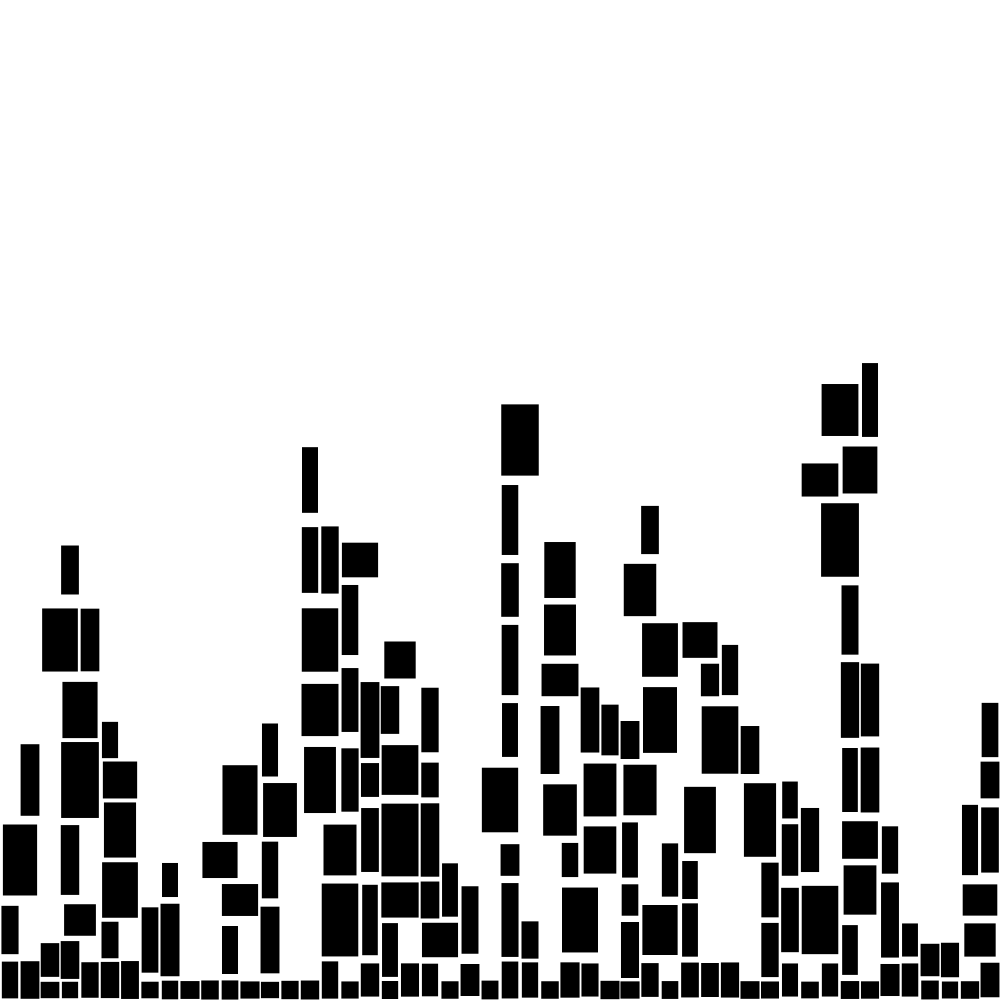
def g57_talus(rng):
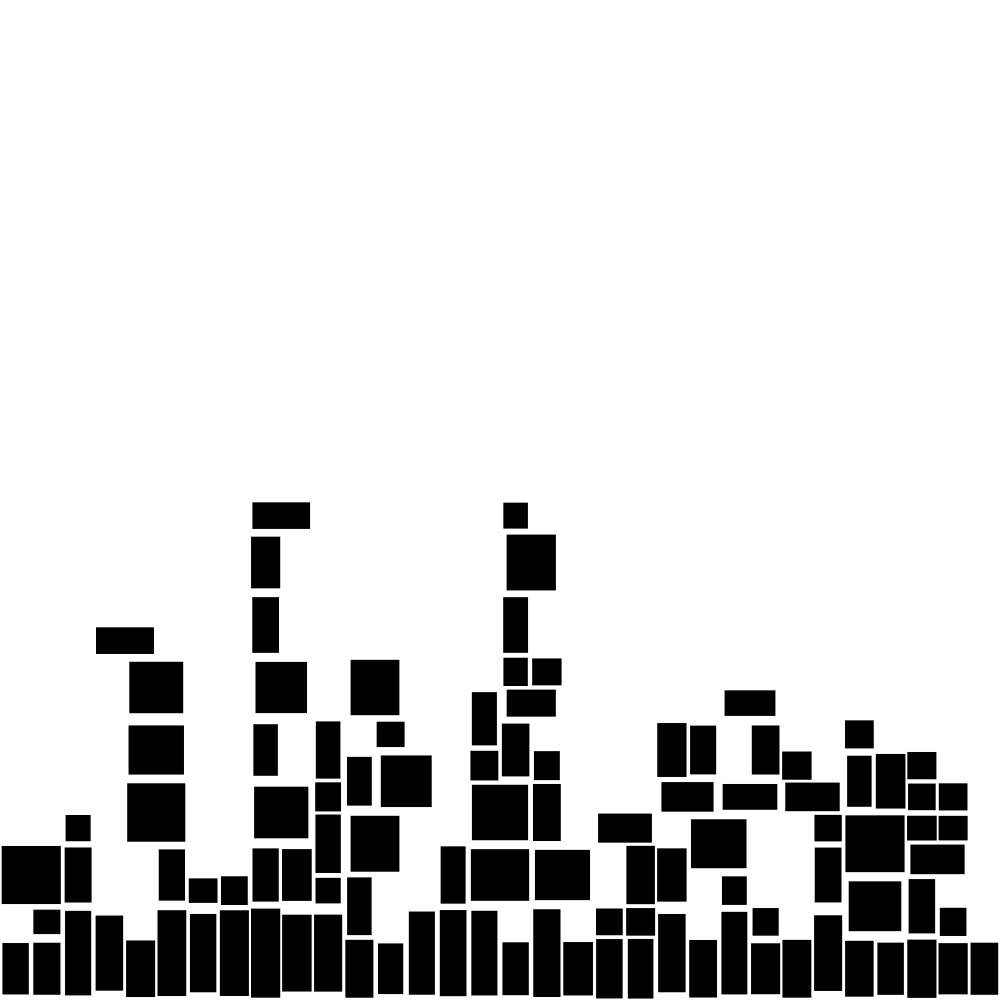
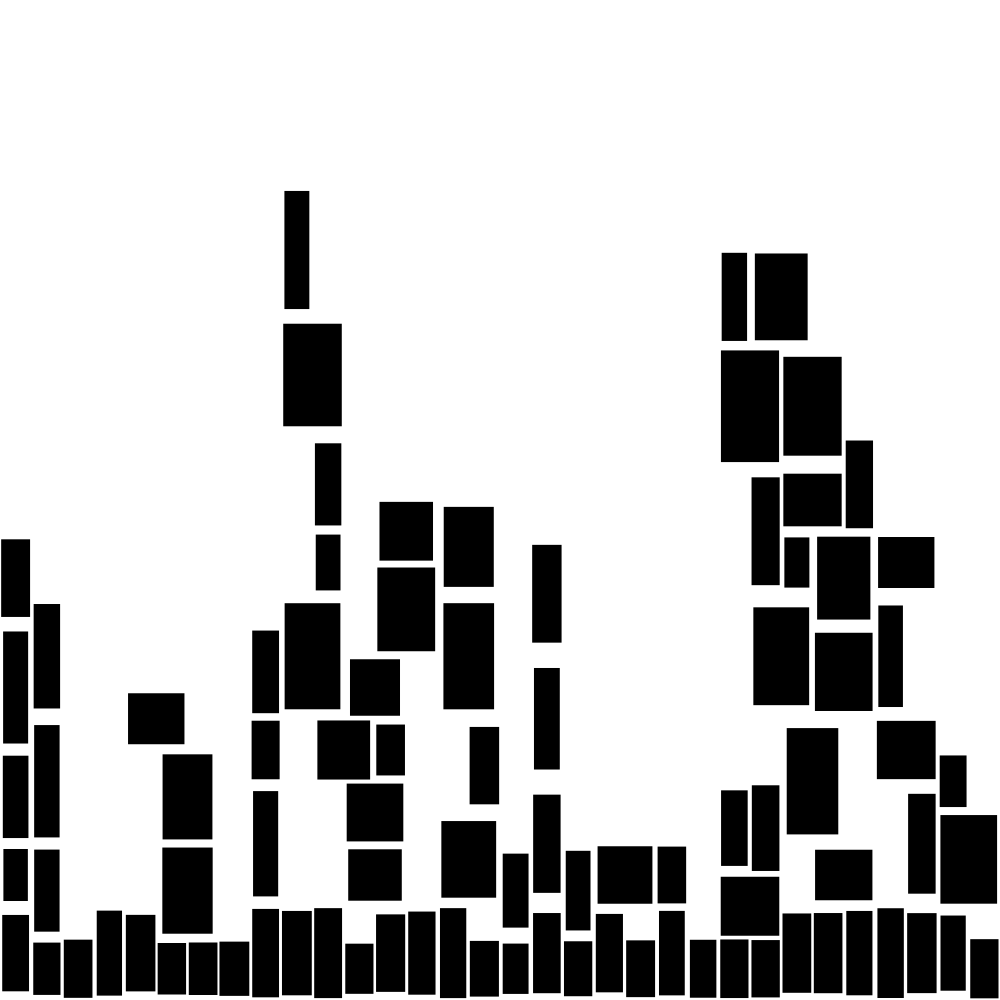
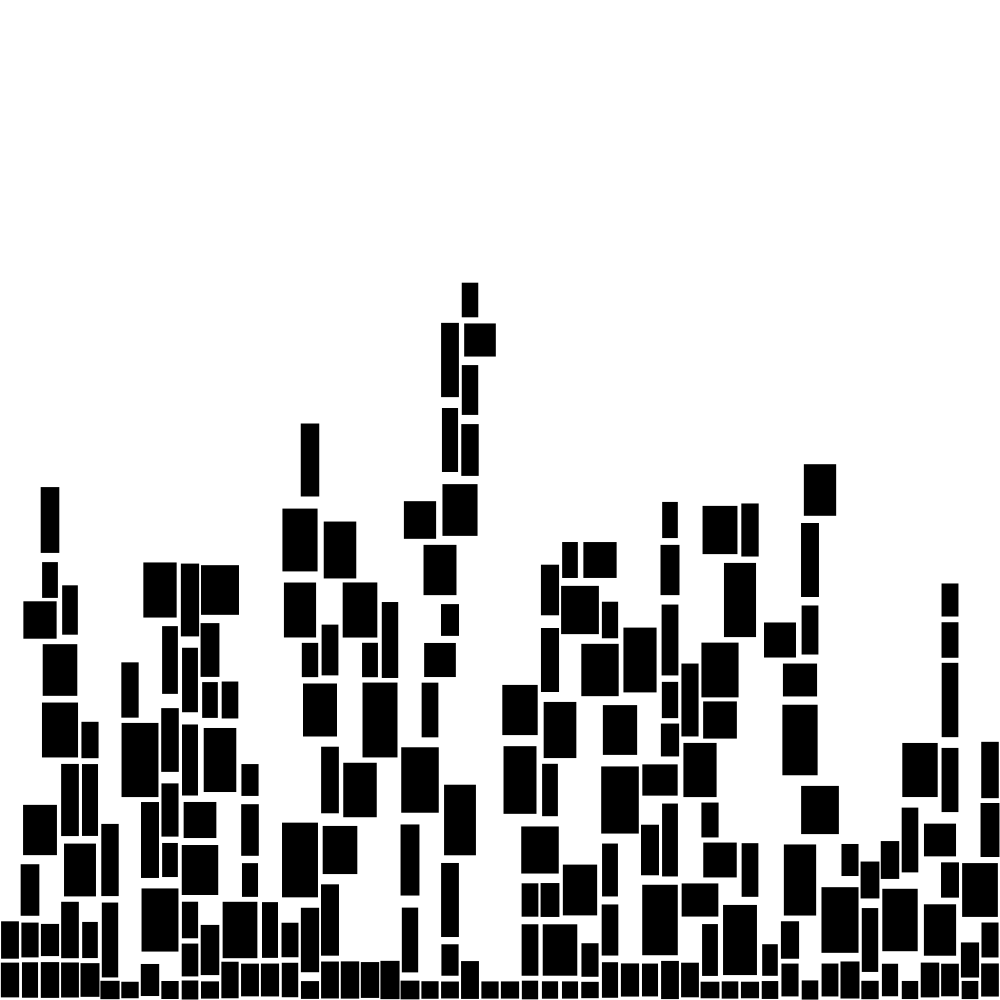
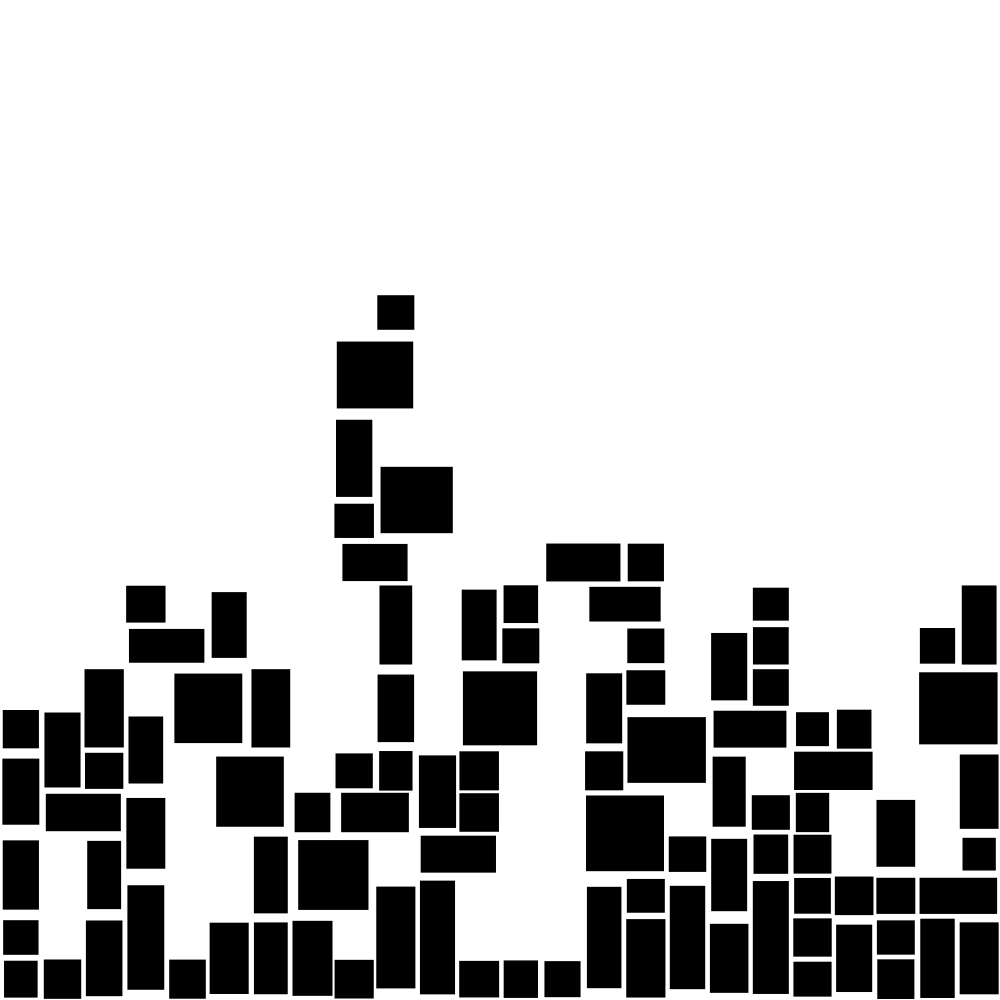
    """TALUS -- rectangular blocks drop by gravity into columns and rest on
    whichever neighbour is tallest beneath them, so each block's landing height
    is set by the collision it lands on rather than by any global rule. A base
    layer guarantees every column has settled scree; a second pass of taller
    boulders piles up wherever the random drop lands, pushing some columns much
    higher than their neighbours."""
    N = rng.choice([24, 32, 40, 50])
    c = Canvas(N, "GEOMETRIC", "squares", "talus", tiles=False)
    C = c.C
    heights = [0] * N  # stacked height per column, in whole cells

    def drop(w, h, shrink_lo, shrink_hi):
        i = rng.randrange(N - w + 1)
        cols = range(i, i + w)
        base = max(heights[k] for k in cols)
        if base + h > N:
            return False
        cx = i * C + w * C / 2.0
        cy = 1000.0 - base * C - h * C / 2.0
        bw = w * C * rng.uniform(shrink_lo, shrink_hi)
        bh = h * C * rng.uniform(shrink_lo, shrink_hi)
        c.rect(cx, cy, bw, bh)
        for k in cols:
            heights[k] = base + h
        return True

    base_lo, base_hi = rng.choice([(1, 2), (2, 3), (1, 3)])
    order = list(range(N))
    rng.shuffle(order)
    for i in order:
        h = rng.randint(base_lo, base_hi)
        cx = i * C + C / 2.0
        cy = 1000.0 - h * C / 2.0
        bw = C * rng.uniform(0.80, 0.96)
        bh = h * C * rng.uniform(0.80, 0.96)
        c.rect(cx, cy, bw, bh)
        heights[i] = h

    wide_chance = rng.uniform(0.2, 0.5)
    boulder_h_lo, boulder_h_hi = rng.choice([(1, 2), (2, 4), (1, 3)])
    boulder_attempts = rng.randint(int(N * 1.6), int(N * 3.2))
    for _ in range(boulder_attempts):
        w = 2 if (rng.random() < wide_chance and N > 2) else 1
        h = rng.randint(boulder_h_lo, boulder_h_hi)
        drop(w, h, 0.78, 0.95)

    return c